

Every month, thousands of families across North Carolina depend on court-ordered financial assistance to cover basic needs. When payments lapse, the consequences ripple through households—and state enforcement agencies take swift action. But how much delinquency triggers severe penalties like arrest warrants for those who fail to pay child support as mandated by their child support order?
North Carolina prioritizes income withholding as its primary tool to ensure compliance. Employers automatically deduct payments from paychecks, minimizing delays. However, when noncustodial parents lose jobs or bypass this system, arrears accumulate quickly. State law permits aggressive measures once debts reach critical thresholds.
Parents facing financial hardship often don’t realize that negotiating modified payment plans can prevent legal escalation related to child support payments. Courts may suspend driver’s licenses, intercept tax refunds, or even impose jail time for chronic nonpayment as they seek to enforce child support. Recent cases highlight judges issuing bench warrants after six months of missed obligations, though timelines vary by county.
Key Takeaways
- Custodial parents in NC rely heavily on consistent payments for childcare expenses
- Income withholding serves as the state’s frontline enforcement mechanism
- Arrears refer to unpaid support exceeding one month’s obligation
- License suspensions often precede arrest warrants in enforcement sequences
- Understanding payment thresholds helps avoid unintended legal consequences
- State practices differ slightly between urban and rural jurisdictions
- Legal alternatives exist for parents facing genuine financial barriers
Overview of Child Support in North Carolina
When families restructure, North Carolina courts prioritize children’s essential needs through enforceable financial agreements established by court order. These court-ordered arrangements ensure minors maintain stability despite parental separation, preventing issues that could lead to contempt court.
Definition and Purpose
Child support refers to court-mandated financial contributions from noncustodial parents. Funds cover basic necessities like housing, school supplies, and medical care. In 2018 alone, these payments provided $691 million for NC children’s well-being.
Key Factors in Determining Payments
Judges use three worksheets to calculate obligations based on custody type:
| Custody Arrangement | Nights With Parent | Worksheet Used |
|---|---|---|
| Primary | 243+ annually | A |
| Shared | 123+ each | B |
| Split | Multiple children | C |
Income shares from both parents form the payment base. Daycare costs and health insurance premiums adjust final amounts. Employers typically automatically deduct funds through income withholding orders.
Consistent payments prevent arrears accumulation. Over 86% of NC cases involve established court orders, creating predictable schedules for families. Direct transfers or online portals supplement traditional payment methods when job loss occurs.
How Child Support Enforcement Works in NC
North Carolina employs a multi-layered system to ensure financial responsibilities, including carolina child support, are met. This approach combines immediate payroll actions with progressive measures for noncompliance, such as addressing issues related to social security benefits and paying child support for the north carolina child.

Income Withholding and Automatic Deductions
Court-ordered income withholding serves as the primary enforcement tool. Employers receive direct instructions to deduct payments from wages before issuing paychecks. This automated process covers 79% of cases statewide, ensuring consistent fund transfers.
Additional Enforcement Tools and Mechanisms
When standard deductions fail, the state escalates efforts. Tax refund intercepts recover $28 million annually in overdue payments. Professional license suspensions and property liens pressure chronic avoiders, ensuring that employers remain compliant with financial obligations. Federal databases help track assets across state lines, safeguarding the recovery of money owed.
Role of the Child Support Enforcement Agency
The NC Child Support Enforcement Agency coordinates all compliance actions. Caseworkers review payment histories and initiate appropriate measures. For severe delinquency, they pursue bank account freezes or vehicle seizures through court orders. Agency records show 63% of resolved cases involve multiple enforcement strategies.
Consequences of Falling Behind on Child Support
North Carolina enforces strict penalties when financial obligations remain unmet. State records show 14% of noncustodial parents face enforcement actions annually for delinquent payments, which can lead to the suspension of a driver license or the blocking of a passport. Employers are also held accountable in ensuring compliance with these financial obligations.
Legal Ramifications Including Contempt and Jail Time
Courts treat missed payments as civil contempt. Judges may order up to 12 months in jail per violation. A 2023 Mecklenburg County case resulted in 90-day sentences for parents owing $15,000+.
License suspensions often precede criminal charges. The state revoked 8,200 driver licenses last year for unpaid obligations. Professional certifications and passports can also be blocked until debts clear.
Financial Impacts: Fines, Liens, and Credit Consequences
Monetary penalties compound existing debts. Courts add 10% interest to overdue amounts. Tax refund seizures recovered $41 million statewide in 2022.
| Enforcement Action | Debt Threshold | Immediate Effect |
|---|---|---|
| Property Lien | $1,000+ | Blocks home sales |
| Wage Garnishment | 30 days late | 50% income deduction |
| Credit Reporting | 60 days late | 100+ point score drop |
Persistent delinquency triggers asset seizures. Banks must freeze accounts holding funds matching owed amounts. These measures remain active until full repayment occurs.
how far behind in child support before a warrant is issued in nc
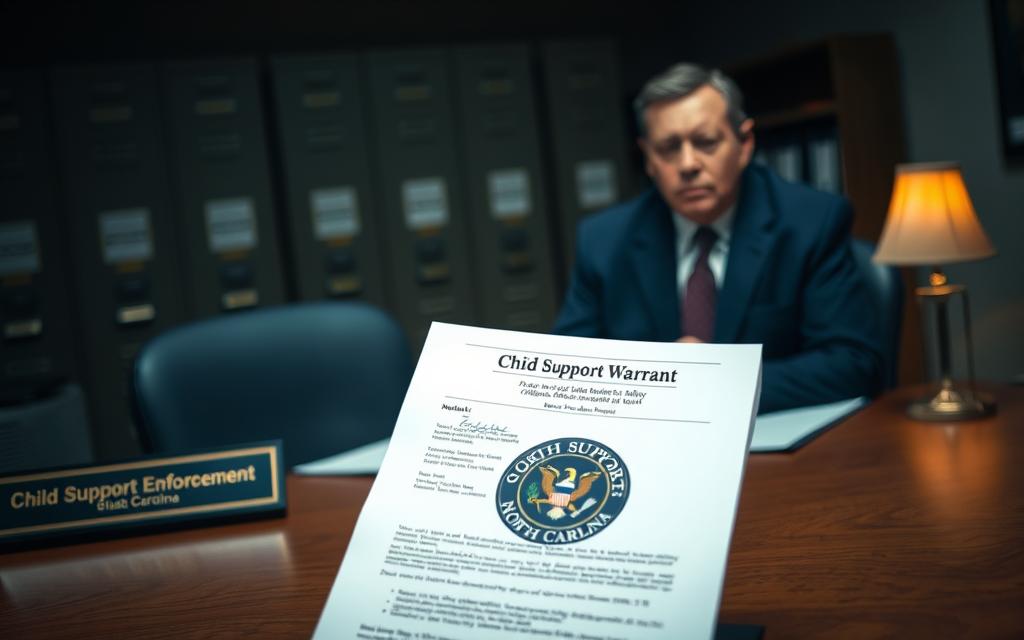
North Carolina courts evaluate multiple factors when advancing enforcement measures. No single missed payment automatically triggers arrest processes. Judges instead analyze patterns of noncompliance through detailed case reviews.
Understanding the Warrant Process and Court Actions
Bench warrants emerge when parents disregard financial obligations despite multiple warnings. Three elements guide judicial decisions:
| Decision Factor | Evaluation Criteria | Common Thresholds |
|---|---|---|
| Payment History | Months of missed payments | 3-6 consecutive defaults |
| Communication Effort | Responses to agency notices | No contact for 60+ days |
| Amount Child Support Owed | Total arrears balance | $2,500+ in most counties |
Courts prioritize documented attempts to resolve debts. A parent actively negotiating payment plans faces lower warrant risks than one ignoring court orders. Recent Wake County cases required proof of willful avoidance before approving arrests.
Contempt proceedings often precede warrant issuance. Judges may impose suspended sentences requiring immediate partial payments. Failure to meet these terms converts civil contempt into criminal charges with mandatory jail time.
Proactive engagement with enforcement agencies remains critical. Parents facing genuine hardship can request formal modifications to their support order. Temporary adjustments prevent legal escalation while protecting parental rights.
Alternatives and Strategies for Managing Child Support Arrears

Financial hardships can disrupt even the most carefully planned obligations. North Carolina offers structured pathways to address overdue payments before enforcement measures intensify. Early intervention often determines whether families resolve issues through cooperation or court mandates.
Seeking Legal Counsel and Expert Guidance
Consulting a family law attorney provides critical advantages when arrears accumulate. Legal professionals help navigate complex enforcement processes while protecting parental rights. A recent Mecklenburg County case saw $18,000 in arrears reduced through negotiated modified agreements facilitated by experienced attorneys.
Modifying Support Orders and Negotiating Payment Plans
Courts permit adjustments to child support orders when income changes by 15% or more. Successful modifications require documented proof of financial shifts like job loss or medical crises. Payment plans approved through consent orders prevent interest accrual on overdue amounts.
| Assistance Program | Eligibility | Key Benefit |
|---|---|---|
| CSS Services | All custodial parents | Free enforcement support |
| Legal Modifications | 30% income reduction | Retroactive adjustments |
| Payment Plans | Active cooperation | 0% interest terms |
Utilizing State Programs and Assistance Options
North Carolina‘s Child Support Services provides free mediation to resolve payment disputes. Their arrears management program freezes enforcement actions for parents making consistent partial payments. Over 1,200 cases last year avoided license suspensions through these initiatives.
Proactive legal action preserves driving privileges and professional licenses. Attorneys can temporarily halt wage garnishments while negotiating sustainable solutions. Each case receives individualized review to balance children’s needs with parents’ current realities.
Conclusion
Maintaining consistent support payments remains vital for protecting children’s well-being and avoiding legal escalation. North Carolina’s enforcement framework uses tools like wage garnishments, tax refund intercepts, and license suspensions to ensure compliance. Understanding these mechanisms helps parents address arrears before facing severe penalties.
Timely action proves critical when obligations become challenging. Consulting legal professionals or accessing state resources can open pathways to modified agreements. Many cases resolve through payment plans that halt interest accumulation and enforcement actions.
Proactive steps like financial planning and early communication with agencies often prevent drastic measures. While courts prioritize children’s needs, they also recognize genuine hardships through adjustment processes. Balancing responsibilities with rights creates better outcomes for families navigating complex situations.
With proper guidance and commitment, parents can meet obligations while preserving stability for all involved. The state’s structured approach aims to protect children’s futures while offering solutions for those willing to engage constructively.


